
Albums
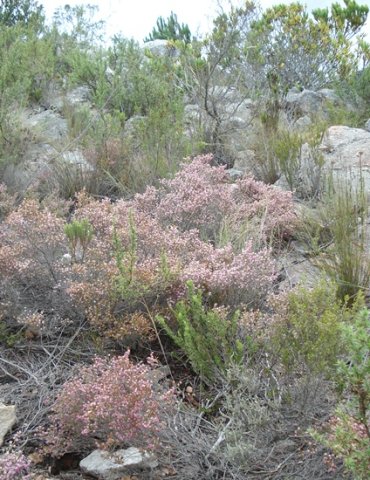
Erica labialis in habitat
Author: Ivan Lätti
Photographer: Judd Kirkel Welwitch
In habitat Erica labialis is understandably adjusted for the demands of fynbos living. It benefits from and contributes to the community it finds itself in, according to its nature. In the photo it blooms during February on a rocky hill north of Caledon where summers are hot.
A mature plant produces thousands of tiny blooms for its annual seed set of the season. Only few new plants grow from all this effort in the year to come. Excess is here not waste but strategy. Insurance in a fire-driven ecological system demands ample provision, in anticipation of expected and unexpected incidents of seed bank destruction.
Fluctuations in pollinator activity from year to year has to be provided for. Irrelevant but inevitable species intrusions in plant wellbeing is a big item. Flowering plants do not specifically provide for human flower harvesting but often include it on a statistical basis via overprovision. Other negative impact players include ants and rodents that eat or remove some flowers and seeds, pollinating or not, while fungi kill some. Many flowers fail by themselves, and some seeds shrivel and die.
So, massive annual bloom is a bet‑hedging strategy. Survival struggles are all wars of a kind (Manning and Helme, 2024; Manning, 2007; Bond and Goldblatt, 1984; iNaturalist).