
Albums
Erica cerinthoides
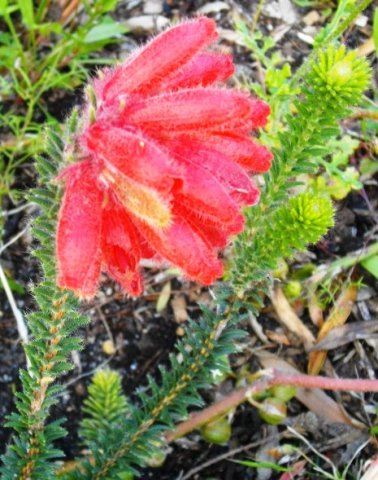
Author: Ivan Lätti
Photographer: Ivan Lätti
Erica cerinthoides is widely described as the most well-known member of South African ericas. Since there are over 860 Erica species in southern Africa alone and 660 in the fynbos, E. cerinthoides is a very esteemed representative of a special genus of South African flowering plants.
Unlike most ericas the erect shrub resprouts after fire from its persistent rootstock. This enhances flowering seasons while reseeders take time to regroup. This makes the common name of fire heath a significant and deserved one. If the plant does not burn it becomes woody and sometimes quite tall, up to 1,9 m but often seen only 30 cm in height.
Why would this one be so well known? It has the widest distribution of all the South African Erica species and shows much variation in response to the challenges posed by particular growing conditions: It is found from the Cederberg and the Cape Peninsula in the Western Cape winter rainfall area, from nearly sea level to mountain top, and eastwards in the southern Cape fynbos where heights of 1,5 m are attained. Surprisingly widespread in summer rainfall areas such as the Eastern Cape, the KwaZulu-Natal mountains, Mpumalanga and the Soutpansberg in Limpopo, where a white flowering form also occurs. Neighbouring countries where it grows include Lesotho and eSwatini (Swaziland).
The Afrikaans colloquial name of klipheide (stone heath) relates to the plants' predilection for rocky, montane places. It is no wonder that the habitat population is considered of least concern early in the twenty first century (Manning and Helme; 2024; Manning, 2007; Baker and Oliver, 1967; iNaturalist; http://redlist.sanbi.org).