
Albums
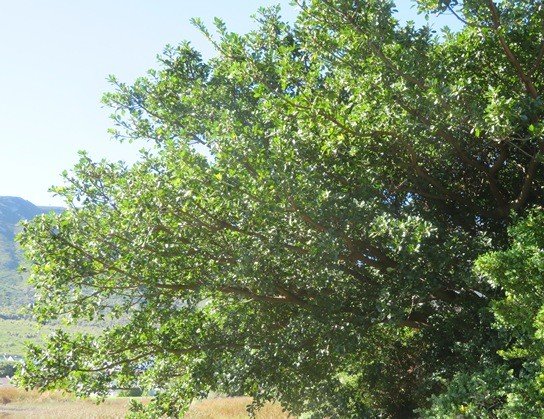
Ficus burkei soaking up sun
Author: Ivan Lätti
Photographer: Francelle van Zyl
Lavish branching and shiny foliage suggest a happy life for this Ficus burkei tree next to the Vermont Salt Pan near Hermanus. Upheaval is rare in these agreeable surroundings between houses and open water. The common wild fig's northerly brethren are no less happy on their termite mounds in the bushveld.
At home is a term referring to comfortable existence of durable tenure, at least for some. People and plants start off where their ancestors used to live or in new regions where migration takes them. Ficus burkei seems to not have been known living naturally in the Western Cape until a few decades ago.
Many things change, including the domicile of species. Human memory has its limits. So do records kept of what grows where, and agreement about what they convey. A tear for libraries lost. History increases in words and disagreements.
Where climate, soil, pollinators and a few more variables fit, a species may go, a tree may grow. Some resist, stubbornly refusing to leave “home”; no rooting in indecent places. Then there is xenophobia, on the up in our time, occurring when foreigners are given a hard time. Plant indigenous is a call that may miss diversity in climate change. It also ignores the history of gardening, cooking and medicine that used plants from everywhere. Balance in everything, including balance! Remember Hawaii where every island starts off as bare rock. Arriving plants differ in status in terms of their dates of arrival, exotic until accepted. Same with the animals, birds, and people. The earth belongs to all, all to the earth.
This tree seems to be welcome here, no ifs and buts, all turned into candy and nuts. Go check the waterbirds at the Salt Pan and greet a new tree friend if you don’t know it already (Coates Palgrave, 2002; Schmidt, et al, 2002; Van Wyk and Van Wyk, 1997; Pooley, 1993; iNaturalist).