Albums
Anacampseros papyracea subsp. namaensis
Author: Ivan Lätti
Photographer: Judd Kirkel Welwitch
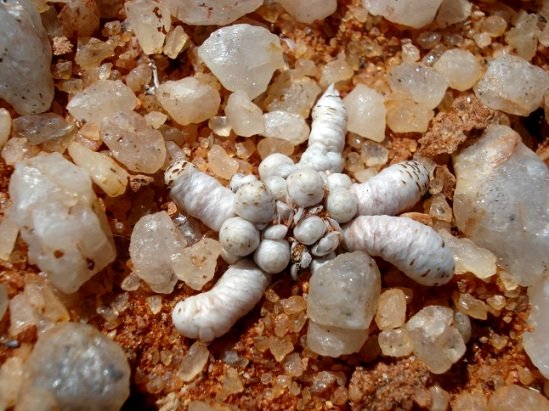
Anacampseros papyracea subsp. namaensis is a dwarf succulent growing cylindrical, whitish branches, up to 8 cm long and 1 cm in diameter. A colloquial Afrikaans name for the species overall, gansmis (goose droppings), plays on the appearance of the branches on the ground, suggesting some geese had recently walked past. This subspecies is called Nama gansmis, as if there might be a difference.
The subspecies distribution is in the northwest of the Northern Cape in the Richtersveld, and northwards in southern Namibia.
The habitat is quartzite flats and rocky outcrops. Loose pebbles with no vegetation covering, a desert-like place, is often where these plants are seen. Still, the habitat population of the subspecies is deemed of least concern early in the twenty first century. At least some plants seem prepared for climate change. We'll see! Or some may see.
This plant earned its reputation as a food item since times immemorial. Food shortages are common in this part of the world. Anything remotely suitable will be eaten. It also featured in home beer brewing. Colloquial names like the Afrikaans moerplantjie (little plant of lees, dregs, draff or precipitate) or kareemoerwortel (probably mead rather than Searsia dregs root) confirm the early usage as a yeast. Some Anacampseros and Avonia plants, the two genera related and name changes fluctuated between them, were also used to provide yeast for bread baking (Williamson, 2010; Van Wyk, et al, 2000; iNaturalist; https://redlist.sanbi.org).