
Albums
Orthochilus leontoglossus lion tongues
Author: Ivan Lätti
Photographer: Judd Kirkel Welwitch
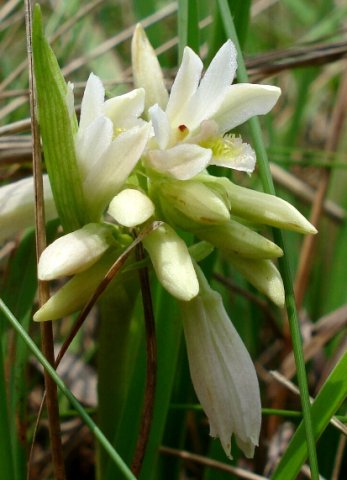
A couple of Orthochilus leontoglossus flower lips in the photo show why the plant’s common name is lion's tongue. The Greek origin of the specific name, leontoglossus, meaning lion-tongued or having the tongue of a lion, is echoed in this common name. The Greek words leon meaning lion and glossa meaning tongue, yielded the formal epithet, later Latinised.
It is said that a lion can draw blood when repeatedly licking human skin, due to the sharp, keratin spine-hooks on the tongue papilla. But lions are not scary because of their licking prowess. The doubtful privilege of inspecting lion tongue closely would provide the relevant information. Volunteers may be hard to find.
The possibility that the flower's lip colour rather than the protruding papillae brought the orchid its name can be ruled out. Lion tongues are pink in several shades, unless the animals are sick in strange ways.
The rounded, dense flowerhead of cylindrical buds is in picture white tinged green. It is gradually opening its white flowers, none of them spreading their segments widely, or normally does so (Pooley, 1998; Lowrey and Wright, 1987; iNaturalist).