
Albums
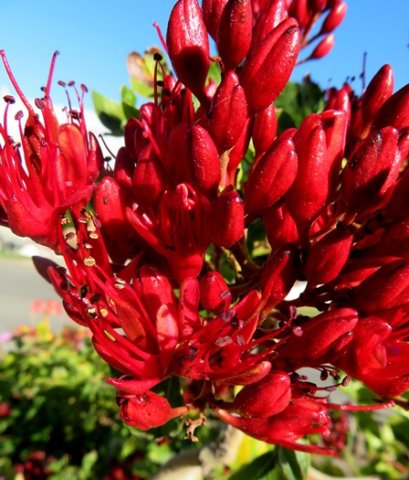
Schotia brachypetala inflorescence
Author: Ivan Lätti
Photographer: Thabo Maphisa
The late winter and spring inflorescences of Schotia brachypetala may be bright red and replete with promising buds, beside the open flowers sporting their styles and stamens for all to see and some to touch. All pointing up as if eager for the viewer or camera, but really for the pollinator, they reach as high as the pedicels will allow in the crowd of expanding floral participants.
The promise in such lavish weeping boer-bean inflorescences is often not fulfilled when fruit pods are counted on the same branch later. Life happens to the exuberant multitudes of early production effort, unmatched by modest output at the end of the season. This is similar to many fervent starts in popular marathon races, contrasting against the finishing line performances of the many.
The weeping boer-bean is after all a big tree, taking up much space in the mixed vegetation of bushveld and woodland where it resides. Maintaining and not overdoing its welcome presence does not require more than a pod or two per inflorescence, moderate seed germination or sapling establishment. Living conditions, users and consumers of a species regulate its numbers. Where a plant is endemic it often does not threaten a stable ecology by excessive reproduction (Coates Palgrave, 2002; Schmidt, et al, 2002; Leistner, (Ed.), 2000; Pooley, 1993; iNaturalist).