
Albums
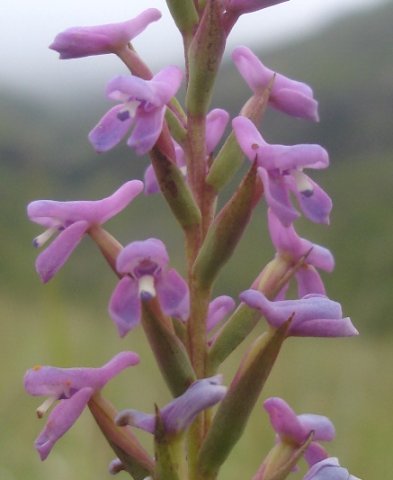
Disa stachyoides advertising pollinator food
Author: Ivan Lätti
Photographer: Judd Kirkel Welwitch
The sac-like, pointed tips of the lateral sepals of Disa stachyoides flowers are well below the white lips. The spurs, the more functional sacs for feeding pollinators are, however, positioned at the back of the dorsal sepals. The corollas appear elegantly streamlined as if ready for swallow dives from their perches on the ovary tips. Ample landing space is available on floral parts for passing pollinators. They are expected to be rather busy here in bloomtime, which is late spring to after midsummer.
The soft corollas in picture don’t appear as durable as the central axis or stalk of the inflorescence, or even the ovaries. Both of these are required to last for longer in fulfilling their reproduction related chores. Much has still to be achieved by the plant in its annual cycle after the flowers are gone.
By winter the grassland will look very different, in contrast to the abundance of summer. The relevant insect life cycles peak in frenzied feeding and reproduction events coincidental with those of the flowers that feed them. Insect life in winter may be carried forward in eggs and pupas, while plants continue in underground tubers and roots, or restart from seeds. The woody ones can do more where it gets really cold.
The resting time overcomes otherwise insurmountable seasonal challenges of the environment imposed on many plant and insect species. They all live through fixed cycles of strong lifestyle contrasts for meeting their generational commitments (Pooley, 1998; Onderstall, 1984; Trauseld, 1969; iNaturalist).