
Albums
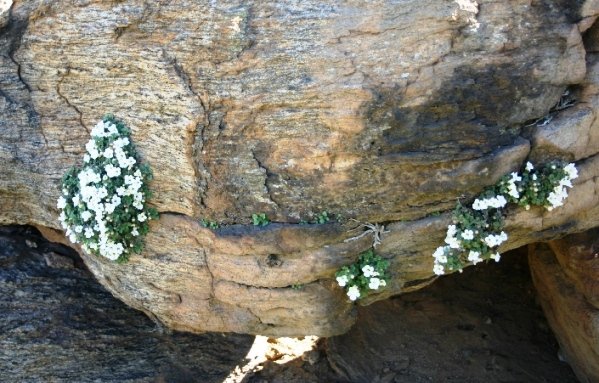
Colpias mollis growing from rock crevices
Author: Ivan Lätti
Photographer: Alet Steyn
The Colpias mollis common name of rock snapdragon is explained by the flower-shape, and by the unusual places where these plants grow on granite boulders. The Afrikaans name, klipblom (stone flower), also allows one to marvel at the plant's rocky perch. Sometimes called a lithophyte (a plant that grows on rocks), and also a chasmophyte (a plant that grows in the crevices and chasms in rock faces), C. mollis leaves competing vegetation behind, living well where the pollinators won't miss it.
The flowers have a curious way of turning away from the light, facing the rock once they have been fertilised. Maybe this saves time and opportunity for pollinators to focus on flowers still needing their attention, and having food waiting for them. And the new seeds ripen close to crevices for settling in and germinating as soon as moisture arrives. Performing its own seed dispersal in this way is called autochory, not using wind, water or animals.
Ants also seem to play a role in carrying the seeds of this plant to suitable spots where new plants may grow, maybe eating the aril attachments as reward. Belt and braces double measures are part of better safe than sorry... the life of the species may depend on it (Williamson, 2010; Le Roux, et al, 2005; iNaturalist; https://pza.sanbi.org).