
Albums
Syncolostemon canescens
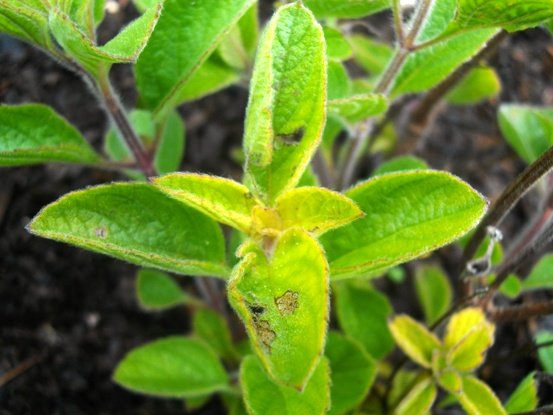
Author: Ivan Lätti
Photographer: Ivan Lätti
Syncolostemon canescens, sometimes called the coconut-scented sagebush and commonly in Afrikaans los-my-uit (leave-me-alone), is an erect, aromatic perennial, woody only at the base where it branches. It grows into a rounded shape reaching heights around 60 cm.
The simple leaves are opposite, short-stalked and aromatic. The leaf-shape is ovate-lanceolate tapering to obtusely pointed tips. The leaves become up to 5 cm long, often densely hairy, the margins coarsely to variably toothed.
The inflorescence may be branched, up to 25 cm long and above the leaves. The small, tubular flowers grow in spaced rings of four to six above small floral bracts. The two-lipped corollas may be white, pink, lilac or violet. The tube is 1,2 cm long with stamens exserted over the lower lip. Flowering happens in summer to after midautumn. The generic name is derived from the Greek words syn- meaning united, kolos meaning stunted and stemon means stamen, referring to the joined lower stamens.
The large species distribution in South Africa includes the provinces north of the Vaal River and the far north of KwaZulu-Natal. The plants also grow in several neighbouring countries.
The habitat is open and semi-arid woodland, rocky grassland and watercourses. The habitat population is deemed of least concern early in the twenty first century.
The species was moved with the rest of the genus Hemizygia into Syncolostemon, which is represented in South Africa by about 40 species (iNaturalist; http://pza.sanbi.org; www.zimbabweflora.co.zw; http://redlist.sanbi.org).