
Albums
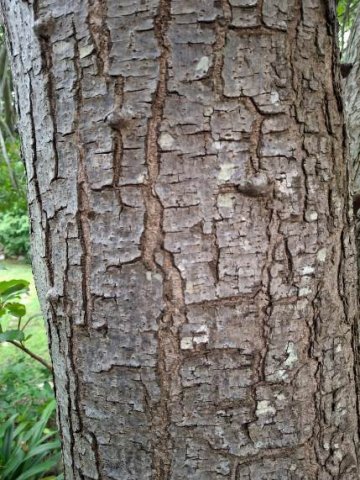
Harpephyllum afrum trunk
Author: Ivan Lätti
Photographer: Francelle van Zyl
The trunk of Harpephyllum afrum, the wild plum, tends to be straight as the tree is often a forest dweller. It has to compete for a cut of canopy space at the level determined jointly by all the trees of the neighbourhood. That level rises slowly but steadily. If a forest tree does not continue to match the neighbours for height, its leaves stop sharing sunlight.
The young bark is smooth, shiny and brown, becoming rough with age. The branch tips curve up. Some big branches take long before their bark turns rough. Old H. afrum tree trunks are usually buttressed in forests. The bases of the largest roots are then usually exposed aboveground, branch-like near the old trunks.
The stem in picture is unevenly fissured. The younger, revealed bark in the vertical rivulets is browner, the surfaces there not appearing smooth at all. The old bark patches are greyer and cracked. The whitish bits visible may be discoloration for some reason or may have arrived from elsewhere, like lichen growth. A few surface bulges are visible, resembling marbles hidden in the bark. They are the beginnings of branchlets that may or may not happen (Schmidt, et al, 2002; Pooley, 1993; iNaturalist).