
Albums
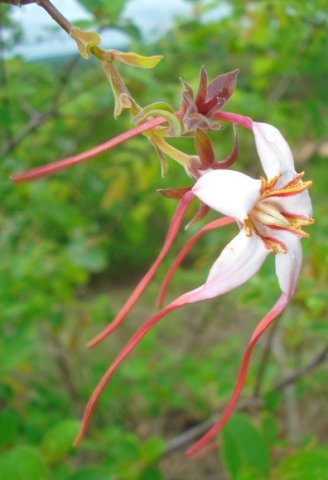
Strophanthus luteolus flowering stem-tip
Author: Ivan Lätti
Photographer: Judd Kirkel Welwitch
This velvety upper branch of Strophanthus luteolus holds one flower, and a persistent red purple calyx that ends in the five narrow lobes once spreading around another corolla. The stiff calyx is far less conspicuous than the corolla that markets the reproductive parts and some nectar to insects, rather than stabilising them.
Some bract remains are seen further back, associated with yet earlier dropped off flowers that did not succeed in fruiting. Aborted flowers allow the plant to conserve energy ensuring a bigger chance for the remaining ones to set seed.
The old branches become smooth, losing their hair (Coates Palgrave, 2002; Pooley, 1998; Germishuizen and Fabian, 1982; iNaturalist).