
Albums
Perception can be fun
Author: Ivan Lätti
Photographer: Francelle van Zyl
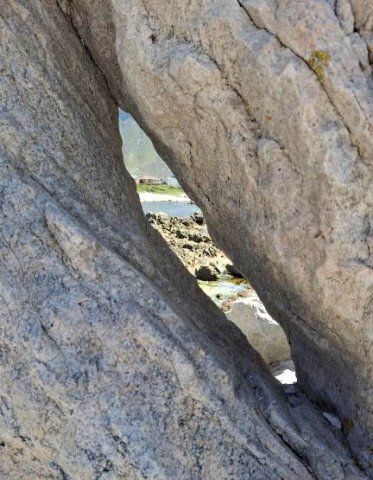
Peering at the world through a peephole reveals only a small part of it. The sensation impacts glaringly or we do not notice it, depending on the nature of the peephole, and the mindset of the observer. The mountain top dark night full of stars stirs feelings very different, for those awake. Yet perceiving even the widest expanse we are capable of, is experienced as a peephole of sorts. The world is simply too big for us.
A limited view can sharpen perception. It forces the observer to notice texture and contrast in what is present. The cleft in stone yields a landscape framed by constraint. It brings home the smallness of outlook fleetingly, for soon we look away. Yet all the time select memories of impactful observations from all settings shape people’s outlook, determine their take on the world, make everyone do stuff in certain ways.
Mindset changes, of course, continually enriched by new observations that settle among the retained images. Perspective becomes a function of position, not of reality. What feels like “the world” is often only the part of it that happens to be visible from where we stand. The larger world does not replace the smaller one. It absorbs it, revealing how the parts cohere.
Stronger impressions usurp lesser ones. In cognition, rank ordering and storage management relegate some to forgetting. For now, for long or forever. This happens haphazardly more than orderly. Nobody knows all the detail. Yet, these subconscious and conscious goings on make us the people we are. From living more, looking more, processing more, chambers in the palace of the mind harbour stacks of sorted and unsorted, sometimes haphazardly labelled material.
Governance lies in few of the neuron threads that promote a vaguely delimited clique of dominant images, arguing with the will. When awareness allows, we weed out some of the consciously unwanted stuff, a percentage of the negatives we notice. That is, if some skills have been learnt. Other retained bits that flash as thoughts keep growing in the mind’s weedy patches, often unseen by oneself but commonly seen by others. From all this people gradually, or fast, become more mundane or weirder. This manifests in the ways we choose to be, to learn and to live.
Control is restricted and variable. For instance, the computer language police say I may neither say mundaner and weirder, nor more mundane and more weird. So, do your mind gardening yourself as far as possible, live with the inevitable, and be careful about which mind gardeners you trust.