
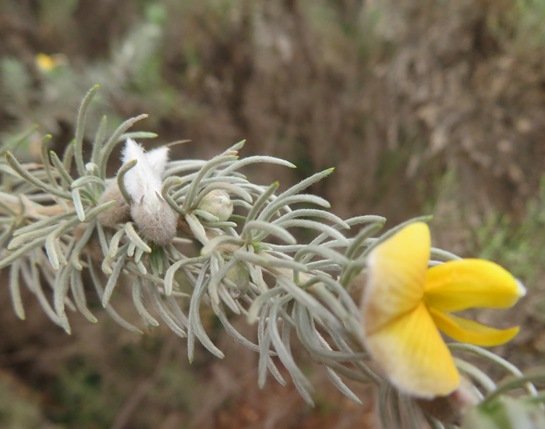
Aspalathus setacea white fluff
Author: Ivan Lätti
Photographer: Francelle van Zyl
The hairy to cottony white mass that seems to protrude from partly opened Aspalathus setacea fruit pods cannot be seeds, as seeds would appear brown and hard, not fluffy as this. As far as is known there are no elaiosomes attached to the seeds of any Aspalathus species. Elaiosomes are plant produced ant food offered by the plant for performing seed dispersal favours. Could an elaiosome ever look like this, or would such things attract ants? Maybe some fungal colonisation of the fruits could more likely be the explanation here.
The flower at the stem tip is easier to comprehend. It has a little white fluff on the back of its banner, the petal nearest the camera, and on the tip of the keel positioned at the other end of the flower. White hairs grow in those places on the flowers of this plant. The wings curve in laterally, also to their tips, flanking the keel that is slightly longer than them (Euston-Brown and Kruger, 2023; iNaturalist; Wikipedia).