
What happens up there?
Author: Ivan Lätti
Photographer: Uri Mitrani
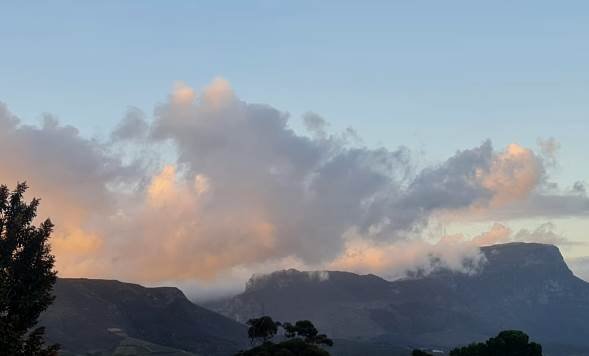
Montane fynbos plants survive in harsh conditions on the ridges and summits of the Western Cape. Cold when cloaked in cloud or snow, hot when burnt by the sun, regularly scoured by winds, continuously coping with soils poor in nutrients, what lives here is harassed continually.
Yet, this severely tested environment is home to an astonishing diversity of species, some of them found nowhere else. Most plants are kept compact from exposure to winds and winter frost, forming tight cushions, mats, or extensive, low ground covers that hug rocky ground, until fire gets them. Some of the proteas are only seen at the high elevations, many ericas perform best at the low temperatures of moutain tops, while the tufted restio stands are resilient in the shallow, sandy soils. Montane geophytes of genera like Watsonia, Gladiolus and Moraea retreat underground during the harsh seasons in corms, others in bulbs, tubers and rhizomes.
The quartzitic sandstone breaks down into coarse, acidic gravel. Constrained by the montane sandstone soils low in nutrients, the plants rely on specialised root systems for extracting scarce minerals. On the high peaks moisture is intercepted from passing clouds, many plants adapted to absorb water directly from mist or dew.
Many species store their seeds in woody cones or specific, functional adaptations established over thousands of years, some underground. Some release their seeds only after fire (https://open.uct.ac.za; https://pza.sanbi.org; https://the-eis.com).