
Moraea tripetala windblown
Author: Ivan Lätti
Photographer: Francelle van Zyl
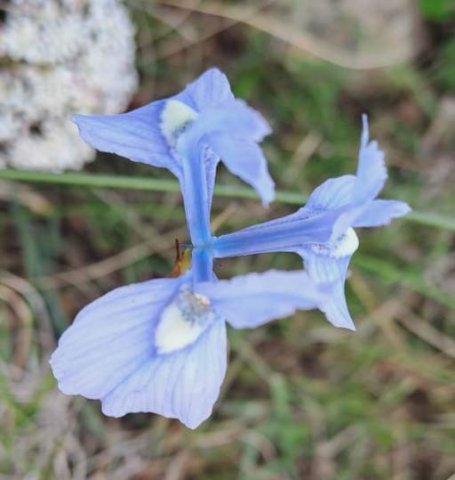
As the flower photos of Moraea tripetala in this Album indicate, there is quite a range of floral variations across the plant’s geographical range. There are three recognised subspecies of M. tripetala all endemic to the Western Cape, paying testament to the plant's diverse looks.
Tripetala means that there are only three and not six petals in this species, which isn’t strictly true. The lesser three are about negligible, as a result cut from the plant's official identity.
This one seen near Hermanus is pale blue as a blou-uintjie (little blue veld bulb or nutgrass) is expected to be. Much of the three visible petal limb surfaces is, however, very pale, almost white. Only the vein lines and the rims of the predominantly white nectar guides are distinctly blue. The bluest part visible on the flower in picture is the upper surfaces of the spreading stalks of the style branches showing. They are positioned elevated exactly over or on top of the clawed petal bases. The upcurved, split tips of these style branches in picture are as unstable as the petal tips in what must be wind.
Dense dot patterns in various colours are present below the white parts in the nectar guide markings on the petal lobe bases. Maybe the eyes of different pollinator insect species are caught by the different colours, which might explain the multicoloured sprinkles approach used by the plant in drawing their attention. Which colour in the Smarties box did you eat first as a kid (Manning, 2007; iNaturalist)?