
Rumohra adiantiformis roughing it up to a point
Author: Ivan Lätti
Photographer: Francelle van Zyl
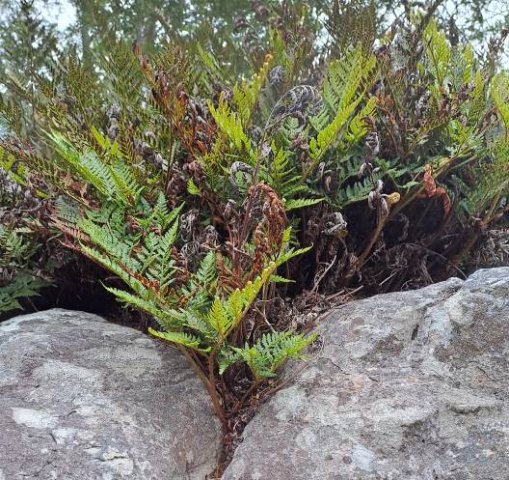
In partial shady spots that dry out seasonally Rumohra adiantiformis plants may do well, sandwiched between rocks as here. Moisture from fog, dew, and showers is easily trapped by rocks and fern rhizomes in such places. The plants stay cooler than when growing in exposed soil, evaporation slowing dramatically as the pockets of suitable microhabitat are opportunely buffered.
Old fronds seen browned are the sacrifice of not living in a perfect world. The fresh green ones confirm the upside of resilience, coping with what comes, bridging the hard times. The secret weapon is underground, the rhizome or rhizomes storing starch and water. This allows these plants to “wait out” the dry spells. Dune thicket, rocky fynbos margins, and forest edges, places where these plants may be found, are generally subject to occasional dry spells in South Africa. So, while this is not a drought specialist fern, it is still a moisture opportunist.
Apart from being terrestrial, growing in the ground, R. adiantiformis may also be lithophytic, growing on rocks, or epiphytic, growing on mossy trunks, in crotches of branches, on fallen logs, or on tree‑fern trunks (Bean and Johns, 2005; iNaturalist; Wikipedia; https://www.fernsofafrica.com).