
Canola flowering
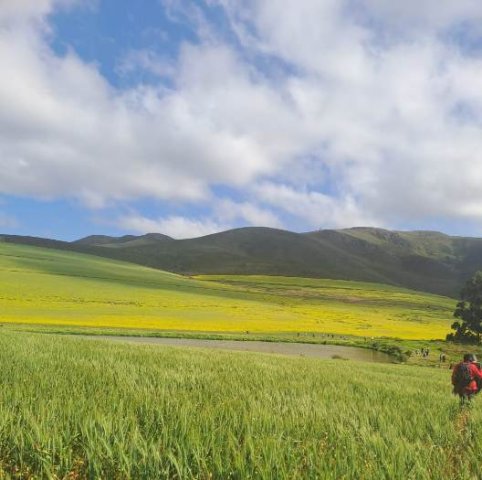
Author: Ivan Lätti
Photographer: Francelle van Zyl
Before the plough, the grain belt of any country was covered in few to many indigenous plant species usually represented by many plants. The species endemic to the cultivated region are by definition extinct, some continuing via rare, scattered specimens in forgotten spots, others vanished without trace. Who cries over spilt milk? Some species hover at risk in inarable niches.
Comfortable in stable populations is the best position for the survival of a species, like humanity in the twenty first century. Other living species are reduced to variably vulnerable, threatened or critical levels, some soon to be extinct.
Humanity in planet-wide burgeoning numbers has to be fed. Farmers are the dominant suppliers of what people eat. The farmers of the Overberg region, a key contributor to national wheat, canola and barley production, watch the skies and read the news about weather short term and long term to do their thing. They fertilise crops, eradicate weeds and bolster their monoculture plantings to yield most per hectare, hoping for a fair price. Next year’s crop is their share of feeding the nation and their way to provide for their families.
To city-dwelling tourists the yellow canola fields are pretty like their own front gardens, just so much bigger. How all the people live in their various ways is what our species does to nature on the planet. Is it serious? Some live lightly, others try to alleviate impact, as the generations to come must be on people’s minds. Whether we are doing enough in our time, must also be on our minds.