
Palmiet River Estuary
Author: Ivan Lätti
Photographer: Wikus Riekert
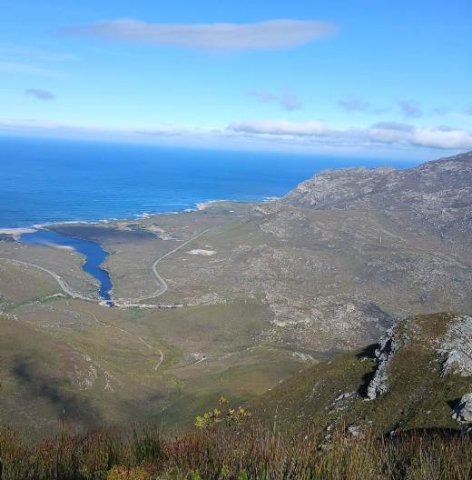
West of Kleinmond, east of Betty’s Bay the Palmiet River drains part of the Kogelberg catchment area covered in fynbos. The river delivers organic matter, nutrients, tannins, and irregularly spaced pulses of fresh water into and through the estuary into the sea. Enjoy the beauty but recognise the complexity!
This is one of the most intact estuarine systems remaining in the Overstrand, recognised and protected as a special place by local institutions deserving support. In some years heavy winter rain scours this channel, widens its mouth, and flushes out accumulated sediments. During the dry summers the river mouth tends to narrow, even close for short periods. This seasonal “breathing”, wide in winter, narrow in summer, establishes a critical rhythm with concomitant ecological happenings. Only limited damming of the water upstream, and interfering with the fynbos ground cover have occurred here. Most other fynbos rivers in the region have already lost more of the natural, seasonal rhythm sustaining the ecology.
The winter flooding leaves the sediments here mostly consisting of sand and gravel, and very little organic matter. Surface water is episodically fresh, at times dark with acid material, the bottom water often clear and saline. This allows marine or salt water species to penetrate upstream, even though the surface resembles only a simple river flowing to the sea. Huge densities of more than twenty local species of invertebrates can be found in the lower reaches near the river mouth.
A burrowing sandprawn called Upogebia africana lives here. It was formerly confused with Callianassa kraussi, another species. The burrowing sandprawn traps fine particles of organic content in the water around its burrows, its faecal pellets adding organic matter. This is but one of the local species contributing to estuary ecology.
Nearly twenty fish species have been recorded in the river. Some of them breed in the estuary, the rest use it as a nursery, or only as a juvenile refuge. Few fish species remain all year round, the others disappearing during floods.
Conserving nature starts with understanding that comes from diligent, sustained observation and analysis. Notes are compared, conclusions drawn, decisions made, and roles allocated for agreed, constructive intervention and corrective measures. Better practices grow over time if care is taken. Fortunately, there is a conservation-minded attitude and effort in the community for a better future (Branch and Day, 1984: Ecology of southern African estuaries: Part XIII. Ecology of southern African estuaries: Part XIII. The Palmiet River estuary in the south-western Cape. South African Journal of Zoology, 19 63 – 77; https://www.overstrand.gov.za).