Bot River Estuary
Author: Ivan Lätti
Photographer: Wikus Riekert
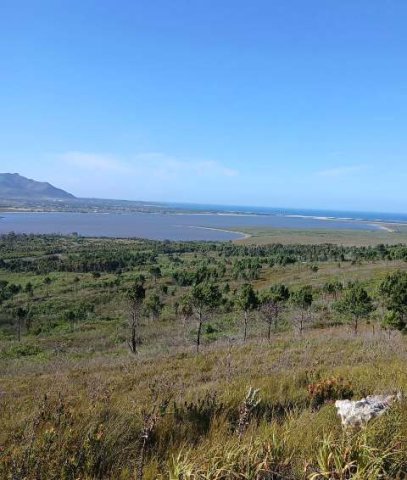
West of Hawston, east of Kleinmond lies the Bot River Lagoon or Bot River Estuary of the Overberg. It is ignored by many that pass at speed to holiday destinations, admired by some as part of a picturesque seaside region, known intimately by few. Recognised as a Ramsar Wetland Site in 2017, the lagoon falls within the terrain of the Kogelberg Biosphere Reserve. Both Ramsar and Biosphere are international systems of recognition and conservation supporting people in retaining valuable natural assets of their homelands.
Another name of the place is the mouth of the Bot River, recognised in the name of the town, Botrivier. The triangular lagoon is the centre of a sloped region known as the Bot River Vlei. The ocean is kept away much of the time by a soft sand dune belt of a few metres high, covered in grasses and scrub. Salt and fresh water mix here, allowing for a richly diversified animal and plant life rarely found, therefore valuable in biodiversity terms.
Towards the sea front, the Rooisand Nature Reserve forms part of the western side of the large lagoon. CapeNature takes care of this Reserve. On the eastern side of the lagoon there are residential developments. Inland, the lagoon borders on agricultural development. The place is a natural treasure of many plant species, bird like waterfowl, land and water animals, all in the midst of a huge and growing human population. Many fish spawn here, come and go as water depth and fluctuating salinity impact in the seasons that may be very different annually. And it is here that the Rooisand or Kleinmond wild horses have roamed the Bot River Estuary wetlands for over 100 years, a completely feral, free-roaming herd.
It has been said that of all ecosystems in southern Africa, none is more threatened than the country's estuaries. Interference to improve such places often makes things worse. People can suboptimise small and short-term objectives by their interventions, provide support in specific areas. They haven’t learnt to improve upon nature in the wider sense, and never will.
Near or in the Bot River Lagoon invasive plants like Acacia cyclops, and some Eucalyptus species, invading animals like African clawed frogs (scientifically known as Xenopus laevis), holiday makers and permanent residents all make up the local mix. Add to that too frequent fires, pollution of various kinds, and it is soon clear that nature experiences interference.
There are compromises between development and conservation that change during every generation. Is it only slipping gradually as human numbers and enterprises increase? Maybe, but the knowledge and conservation projects also make headway. A satisfactory balance? It depends upon whom one asks. There is continual knowledge growth, commitment and achievements among the inevitable imperfections. There is the realisation that the generations to come will always need nature, as well as the other usual comforts (Wikipedia; https://www.colourdots.co.za; https://fisherhaven.co.za).