
Dracophilus dealbatus declaring an unlikely place home
Author: Ivan Lätti
Photographer: Judd Kirkel Welwitch
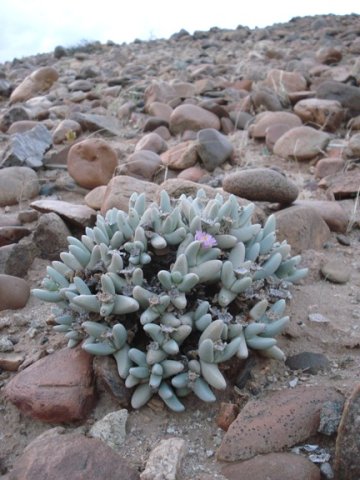
When the hand you are dealt leaves you with less than a leg to stand on! The cliché of exemplary performance does not do justice to this Dracophilus dealbatus plant in its stone desert environment. It lives here, for the place suits it. Rooting is for life.
Many earlier plants of its ilk succumbed here before seed set, because they could not cope with the situation, and left no offspring. Bless their souls! They are not real ancestors of this plant, for they died too young to breed. But they are relatives who contributed in their way by getting out of the way for allowing the tribe to grow stronger.
Achievement is not here about biomass produced, more about the masterly deployment of available energy. It is done by things like low metabolic rate, adding only few long-lived leaves per season rather than rapid leaf turnover, by adopting appropriate above-ground colours, texture and wax coverings for reducing heat load and evaporation, and by presenting minimal exposed area to the elements. Plant shape fits the requirements, reducing wind exposure and withstanding blasts by sand. Streamlined for low wind resistance anchors the plant, especially when the dry sand moves.
The plant body is equipped for retaining its turgor, the rigidity of cells and tissues that sustains its internal water pressure at optimal levels. The capacity for absorbing moisture, and retaining it during periods of drought is vital, so the plant spends stored water slowly, economically.
And the stones that give the spot its forlorn look? It’s cooler under them, and moisture lasts longer there. They may even contribute in saving plant parts from herbivores. Or serve in giving a few of the dispersed D. dealbatus seeds cosy nooks, so they can take the story further, some time soon.