
Orthochilus aculeatus subsp. huttonii resupinating
Author: Ivan Lätti
Photographer: Judd Kirkel Welwitch
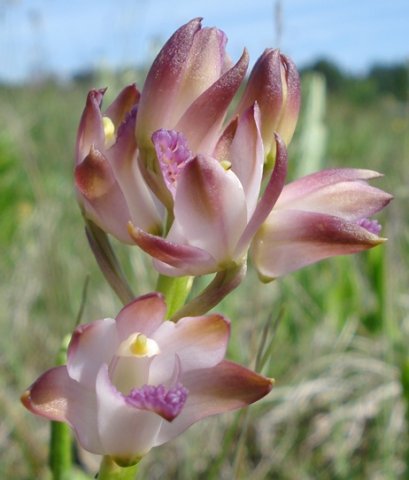
Newly opening Orthochilus aculeatus subsp. huttonii buds do a gradual twist through 180° that takes their lips from the top of the flower to the bottom, below the vital parts in the central, floral column.
The process is called resupination. Orchid flowers have their lips at the top in the tiny beginner buds. Resupinated orchids position their flowers' lips conveniently below for pollinator landing. These platforms serve the pollinators for reaching the food they came for, and simultaneously touching the parts involving pollen transfer. So, the lips are equipped with species-unique visual, colour and shape clues ensuring the most precise pollen transfer in an uncertain world.
In picture, the buds at the top still have to twist, some below them are partly done, while the lowermost open flower is fully resupinated. Pollinators that land on resupinated lips, find the male parts in the floral column from which pollen is obtained once it is ripe. Some pollen they did not eat gets stuck to their bodies, and transferred onto stigmas, the female flower parts of other flowers visited subsequently.
Flowers of a species naturally have a particular look and feel. This fits the still hungry pollinator's appetite for more of the same. If you like what you tasted, here are more morsels from the same kitchen! Come along without wiping your mouth, feet and whatever! The insect carries on visiting more flowers of the same species in sequence, as long as it remains hungry. Evolution sorted this out, for foreign pollen won't grow here.
Only some orchids are resupinate. The flower structure of resupinating species became like this for they yielded better pollination results, so the flowers deformed or enhanced like this until the resupination solution became their norm. This left non-complying flowers of the same kind dying prematurely, unfertilised, no seed set, the transformation of the species fully implemented. Uncle Darwin's stories are still true enough but today there are more known twists to the tale. In the meantime, many other orchid species sustaining non-resupinating flower structures perform just fine under their older pollination arrangements.
That is the general system, give or take specific peculiarities. Functional and non-functional deviations happen in flowers as in life, some insects getting fed, and some orchids getting pollinated. As long as the pollination statistics for your species are favourable, your kind and your pollinators stay extant, as long as other factors remain unchanged (Germishuizen and Clarke, 2003; Pooley, 1998; iNaturalist; https://www.orchidspecies.com).