
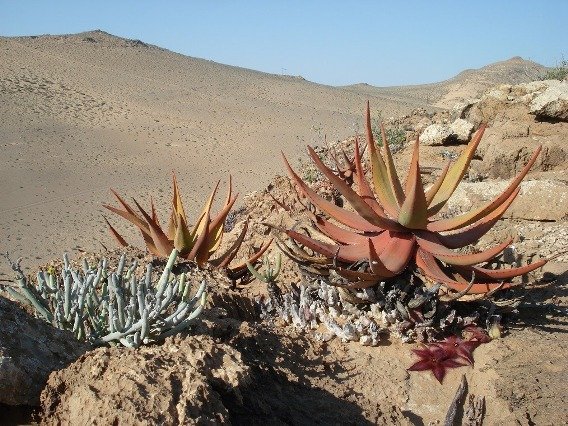
Aloe gariepensis lording it over an empty empire
Author: Ivan Lätti
Photographer: Judd Kirkel Welwitch
Aloe gariepensis does grow in the Richtersveld, often on steep, rocky slopes. The sandy soil is shallow here, derived from granite, sandstone or shale. Stone of this land presents interesting sightings like red granites, flaky black shales and white quartzite rocks and pebbles. Long after sunset the summer's day heat lingers around and in the plants too familiar with near-furnace conditions at midday. The neighbourhood is mostly rugged, succulent shrubland and bare rock, all dominated by aridity. Every plant microhabitat is a unique niche of hardship more than comfort where all do what they can.
The neighbours are often from succulent families like Euphorbiaceae and Apocynaceae, wide-ranging other genera like Crassula and Conophytum, tough little contributors to the plant community that flower when their time comes. Adaptation to xeric stress is portrayed in the aloe’s upright rosette prepared for some heat avoidance. The glaucous bloom on the thick skin leaf surfaces reduces the relentless UV load. Flowering for many here is a rapid affair, often coinciding with brief intervals of higher moisture, often not much more than a trigger. These intervals of relief arrive as the rare thunder storm, river fog from the Gariep, or occasionally a sea-borne mist from the west.
The A. gariepensis population in these parts is thought to have declined sharply in some early twenty first century drought years. Too many growth seasons that promised but never came thinned the stands of even the most succulent species. The welcoming representatives that stand up to be counted are mostly scattered, hardy veterans.
Those that hiked here a few years ago with camera and notebook grieve about what has already happened to the vegetation, and what is still likely to test them in a warming world (Van Wyk and Smith, 2003; iNaturalist; https://www.gbif.org; https://powo.science.kew.org).