
Pellaea pteroides proliferating
Author: Ivan Lätti
Photographer: Francelle van Zyl
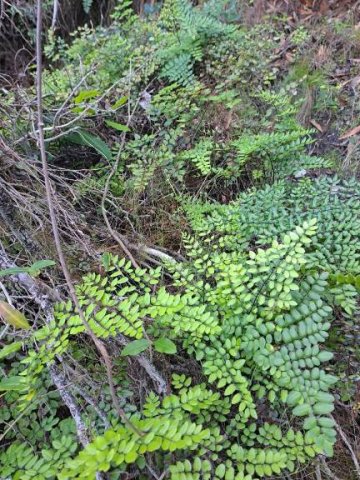
This stand of Pellaea pteroides plants was seen in a shady spot under trees near Hermanus. It is probably the younger fronds that are yellow-green, the older ones dull deep green and leathery.
The stipes at the frond bases and the rachises connecting the frond segments are black. The smaller fronds and the tip parts of bigger ones have only alternated to nearly paired green segments on both sides of their rachises (pinnate). The more developed parts have lateral rachises of their own, pointing sideways, flanked by more segments, repeating the pattern of segments in bipinnate fashion. Some mature fronds may be tripinnate.
The fronds are angled more horizontally than vertically, allowing most available light reaching the upper surfaces, in the interests of optimal photosynthesis. Bright, indirect light is usually optimal for fern photosynthesis. Direct sun may be harmful, while too little light is equally problematic (iNaturalist; Wikipedia; https://biologyinsights.com).