
Cliffs losing face
Author: Ivan Lätti
Photographer: Francelle van Zyl
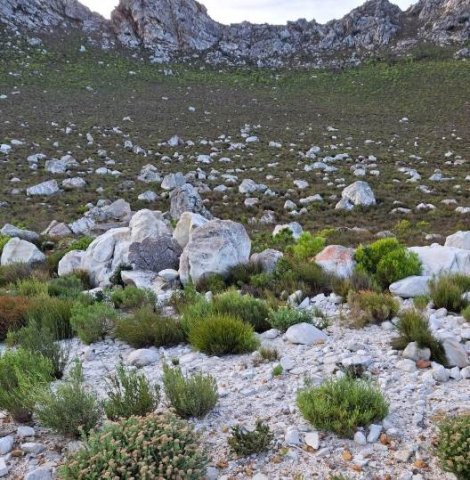
Cliffs erode imperceptibly over time. Their faces become resculpted by the discarding of pieces that towered over particular panoramas for centuries. Weather erodes exposed rock through sun, wind and rain. Plant roots inveigle their way into the tiniest cracks, following moisture. They benefit from salts and whatever else is nutritious from the rock itself, and from serendipitously arrived nutrients. As the roots grow, so do the cracks.
When rock pieces, from stone to boulder, come tumbling down, woe to the passerby in the wrong place at the wrong time. Falling suddenly, momentum pushes the rolling stone vigorously at first. Slowing down follows promptly, when confronted by obstacles in the way, and by the reducing gradient of the lower slope. Every moving piece comes to temporary rest or final destination somewhere in the scree towards the low end of the hill. Plants broken along the way have some chances of recovering from the impact, excluding perhaps those upon which the rock came to a halt.
In this way cliff faces change, incident by incident, moving back from earlier positions. The brittle parts go sooner, the hard rock holding steady. Receding is the cliff’s only option, to some extent inevitable over time. The natural rock face transformation moments are unpredictable. Mostly unseen, the moment of a rock fall is rarely photographed. Well-spaced photos of the same cliff over time, viewed together, show the cosmetic changes, be they dramatic or negligible. Changes in the vegetation over such time intervals may be equally remarkable, sometimes cause concern.
Big inundation makes for incidents of rocks randomly rolling down steep slopes. Devastating mud slides are increasingly in the news, probably more often than not relating to harmed vegetation coverings. In the fynbos, weakened rock patches on slopes up high, maybe aggravated by too frequent fires, cause slides during storms that leave large, vertical scars on the slopes. These bare rock patches in the green usually last for years, remaining devoid of vegetation, especially in their higher sections.
Live elsewhere, not on the slope, unless you’re a hyrax, a dassie. If you are, breed faster.