

Disa cylindrica
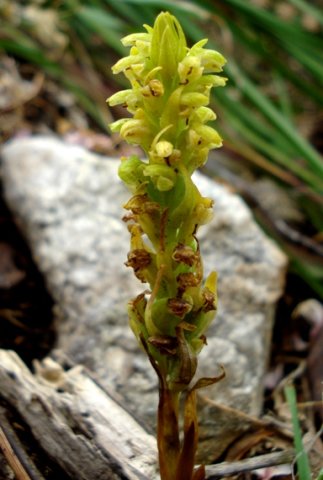
Author: Ivan Lätti
Photographer: Judd Kirkel Welwitch
Disa cylindrica, sometimes called the column disa and previously scientifically Satyrium cylindricum, grows a slender, erect stem annually to heights varying between 8 cm and 35 cm.
One or two basal sheaths with obtuse tips, glassy and transparent in texture, are found around the stem base below the leaves. The stem-clasping, strap-shaped leaves grow along the lower stem parts, decreasing in length higher up until they grade into floral bracts on the flower spike. The ascending leaves have wavy margins, the blades tapering to acute tips are up to 8 cm long.
The species distribution is in the Western Cape from the Cape Peninsula northwards to Clanwilliam and eastwards coastally to the Eastern Cape as far as Humansdorp. The photo was taken in the Fernkloof Nature Reserve at Hermanus in October.
The habitat is damp or swampy coastal flats to upper fynbos slopes at elevations from near sea level to 1200 m. The habitat population is deemed of least concern early in the twenty first century (Liltved and Johnson, 2012; iNaturalist; http://redlist.sanbi.org).