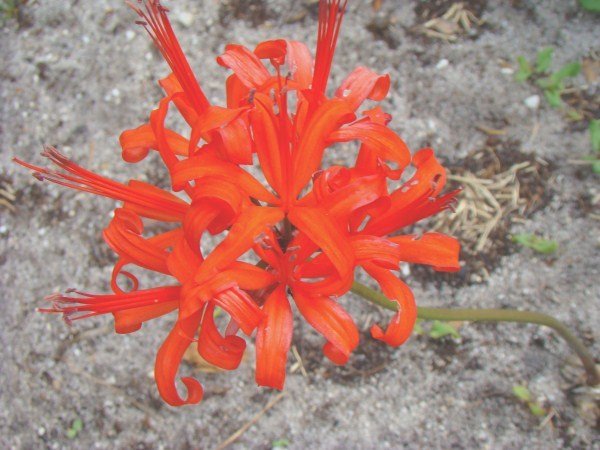
Nerine sarniensis
Author: Ivan Lätti
Photographer: Ricky Mauer
Nerine sarniensis, locally called the red nerine, is a perennial geophyte reaching from 25 cm to 45 cm in height.
The plant is a Western Cape endemic, found in the western parts of the province. It has a fascinating story, maybe history of botanical peregrination. As the prettiest flower among the already long-ago sought-after Cape of Good Hope nerines, a consignment of N. sarniensis bulbs were shipped to Holland in 1659, only seven years after the first permanent settlement of Europeans at the Cape. The ship got into trouble, and boxes of bulbs were jettisoned from the sinking ship near the island of Guernsey. Some of the bulbs from the broken boxes started growing there, apparently without human intervention... becoming "indigenous".
So the story goes. N. sarniensis bulbs are today still flowering on the island, known widely as the Guernsey lily, also cultivated there commercially for cut flowers. The latinised specific name, sarniensis, relates the plant to Guernsey. There are other stories of how these Cape flowers first came to Guernsey. The name Jersey lily also exists. None of the stories is as spectacular as the one above, but some may be closer to the truth. As long as Google can’t provide verified records of “the real” history, like photo images of flowers growing in the Garden of Eden, we may never know what really happened.
We are a story dependent species, growing them like weeds around the other species we notice on earth. Stories abound also about fantasised species on exoplanets, sometimes visiting via UFOs. Plausibility is elastic, yielding versions of embellished veracity, often clustered around raconteurs. Forensic investigators brush off some coatings but sometimes run out time and ideas prematurely. Thus, history remains the bag of tricks we play on the dead, as Voltaire is rumoured to have said.
The habitat of N. sarniensis is fynbos slopes in sandstone derived soils. The (South African) habitat population is deemed of least concern early in the twenty first century (Manning, 2009; iNaturalist; Wikipedia; http://redlist.sanbi.org).