
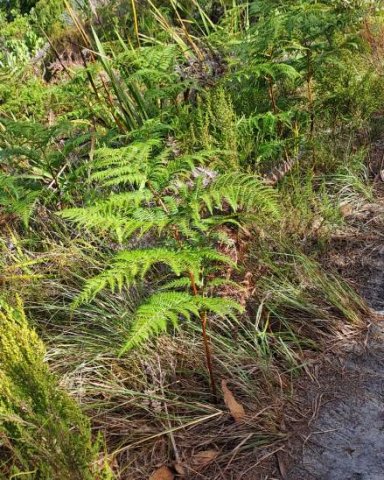
Pteridium aquilinum subsp. aquilinum enjoying the sun
Author: Ivan Lätti
Photographer: Francelle van Zyl
The hard, hairless fronds of Pteridium aquilinum subsp. aquilinum grow small, new parts from the tip, while extending the triangular, opposite pairs of biggest, lateral frond branches lower down. This is how the erect red brown stem, the stipe, curved near its top, annually bears the above-ground parts, easily recognised in the veld.
The plant prefers well‑drained, acidic, nutrient‑poor soils in open woodlands, forest edges, disturbed ground, old pastures, and burned areas. It is hard to eradicate this invader from places where the conditions suit.
The annual cycle starts with the soft green fiddleheads emerging from the ground in spring. The fronds peak in summer and die back in autumn, rapidly from frost. The underground rhizome network persists perennially, ready for the next rise in temperature, if it is not extremely dry. The deep, long‑running rhizomes allow fast lateral spread (iNaturalist; Wikipedia; https://everydayearth.ai).