
Dietes bicolor
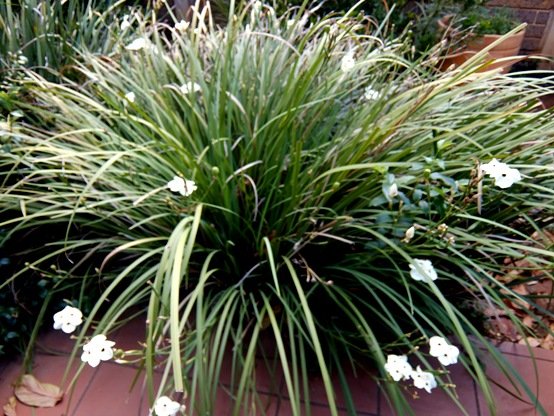
Author: Ivan Lätti
Photographer: Ivan Lätti
Dietes bicolor, commonly known as the peacock flower or the yellow wild iris and in Afrikaans as the uiltjie (little owl) or the poublom (peacock flower), is a rhizomatous perennial that grows from 80 cm to 1,2 m tall. A mature plant becomes a large clump, spreading to about 1 m in diameter.
The bright green leaves are long, thin and sword-shaped, only up to 2 cm wide and acutely pointed. Leaf texture is tough, a double vein longitudinally along the centre.
The species distribution is coastal in the Eastern Cape from East London to Makhanda (Grahamstown).
The habitat is streambanks and marshy areas. This is a rare species in nature, although the habitat population is deemed stable early in the twenty first century.
D. bicolor is widely cultivated, often seen in South African parks and gardens. It performs best in full sun or light shade near water, and survives light frost. The species had been exported to European gardens, albeit probably not commercially, from before South African gold and diamonds were discovered.
The Dietes genus comprises five South African species and one on Lord Howe Island, north-east of Australia; a curious spread for the members of one plant genus. Maybe the continental drift involving the supercontinent, Gondwanaland, had something to do with this. Dietes is closely related to two other Iridaceae genera, viz. Iris and Moraea: The short creeping rhizomes resemble those of Iris plants, while the flowers remind of those of some Moraea species that grow from cormous rootstocks (Pooley, et al, 2025; Duncan, 2010; Pooley, 1998; iNaturalist; https://pza.sanbi.org; http://redlist.sanbi.org).