
Albums
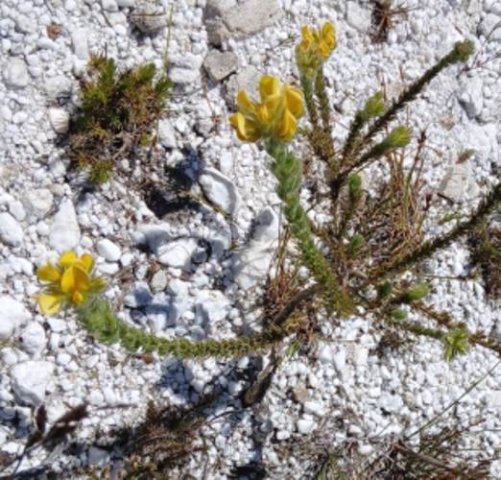
Aspalathus aspalathoides all right, although not called Jack
Author: Ivan Lätti
Photographer: Wikus Riekert
While this wiry Aspalathus aspalathoides plant in white gravel near Hermanus in November is sparsely branched, the upcurving branches are all tipped with inflorescences, or new leaf growth that may involve branching as well.
The leaf hairiness reduces water loss, equipping the plant for the dry summer of the Mediterranean climate experienced in the southwest of the Western Cape. The plant's above-ground component copes with reflected sunlight from the whiteness below. At least the roots experience reduced heat stress thanks to the pebbles. In the absence of much surrounding vegetation the stones contribute to moisture retention in the soil, as more roots would have taken their share.
Some nitrogen fixing by the roots in the soil is happening, as this is a legume plant. Living spaces on earth are always more complex than imagined at first glance (Manning, 2007; iNaturalist).