
Albums
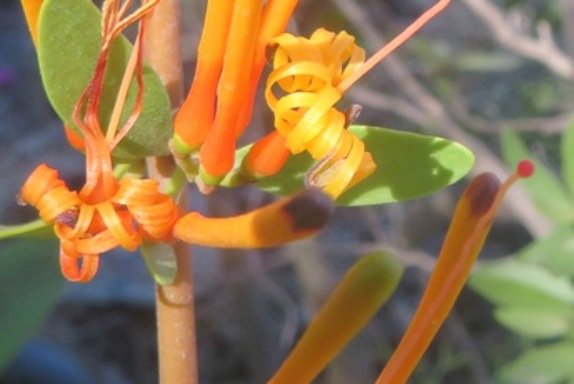
Moquiniella rubra corolla base bulges
Author: Ivan Lätti
Photographer: Francelle van Zyl
There is a deeper orange, bulging section at the base of each Moquiniella rubra flower. This is above the small green section where the inferior ovary resides, the origin of the fruit.
It is thought that nectar is housed in the basal corolla part not split by the explosive flower opening. Several species of sunbirds may be the main, and probably the only significant pollinators of this long-tube flower species. The tiny explosive action is usually brought about by a touch from the pollinator that in return instantly gets “powdered” upon its feathers, while fed nectar from the corolla base that does not split.
This is the ideal situation in terms of both bird and plant interests. Just imagine how many generations of plants and birds it must have taken to evolve such a system (Euston-Brown and Kruger, 2023; Shearing and Van Heerden, 2008; iNaturalist; https://www.worldfloraonline.org).