
Albums
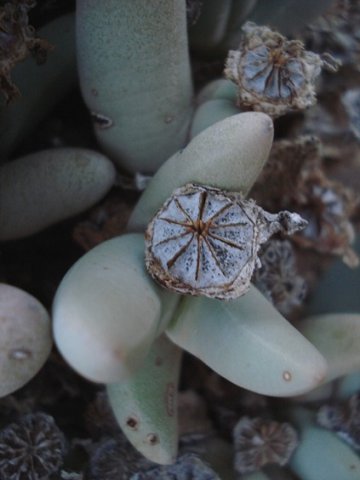
Dracophilus dealbatus fruit capsules
Author: Ivan Lätti
Photographer: Judd Kirkel Welwitch
As is the case for most fruits on earth, these Dracophilus dealbatus capsules appear very different from the flowers that brought them about. A fruit’s function is the ripening and releasing of seed for a new generation to succeed the parent plant, in new places near or far. This work centres in the flower’s ovary where the female ovum awaits the male pollen, obtained from other floral parts.
A fruit capsule of D. dealbatus contains numerous small seeds in eight to eleven, sometimes up to fourteen compartments arranged like cake slices. Each compartment or locule has a valve on top that opens when wet to release the ripe seeds. The locule valves close again when dry. Seeds not flushed out with the first rain, will depart during or shortly after subsequent showers. This increases the chances of successful germination, as conditions over time may differ. Better to spread it a bit, rather than dropping all the seeds from the “basket” in one go.
The piecemeal functioning of opening and closing capsules is called hygrochastic, meaning the intermittent dehiscing of capsules in response to moisture (Smith, et al, 1998; iNaturalist; https://www.worldfloraonline.org; https://openaccess.wgtn.ac.nz).