
Rock markings resembling code
Author: Ivan Lätti
Photographer: Uri Mitrani
Relics and artefacts found and to be found on the face of the earth give glimpses of early human existence and that of its closer relatives. The early Bronze Age yields some of the earliest signs, while some late Ice Age marks are of interest. Water and ice coverings came and went in many places in earlier times, limiting the physical range of human settlements. Some of the dates of those events are hard to guess. Relics left by people sometimes serve to fill in bits of information.
Some earthly sites were favoured over others, more early signs concentrated in fewer spots. Those closer to point(s) of origin or more accessible for early humanoid occupants were lived in early, while others were selected for being more convenient or offering better resources for supporting life. Earliest peoples and some of those resembling them used tools long before they started keeping records of anything, or left symbols and pictographs as forms of communication.
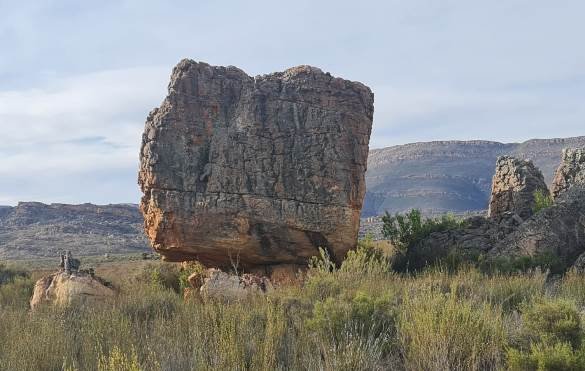
Patterns seen on rocks can deceive, as the remains of early communication is hard to decipher, even to identify per se. Fascinating rock markings that resemble the human touch were caused by nature in forms of erosion, and other natural occurrences. This South African rock is a case in point. Upper rock layers erode faster in some parts, leaving the resilient bits that may resemble ancestral scribblings.
Rock paintings in South Africa are plentiful, not so the remains of ancient writing. Elsewhere on earth kinds of early records and messages have been found in great numbers, and are still being found on rocks and other surfaces. Even earlier, intriguing signs were left by ancient communicators in southern Europe and China, predating cuneiform and hieroglyphs by a few millennia.
Determining what ancient record keeping, communication or cultural expression is embedded in discovered artifacts (or noise), presents challenges. The human brain functioned much like our own many thousands of years before the first recordings were left for posterity, although those people had much to tell us. So, figuring out what our distant ancestors were up to is almost as interesting but not as risky as reaching beings from other planets.
In places where the markings are not writings, as on some South African mountains, the doings of the ancients that lived here are more elusive, but for the paintings by the ancient San artists. None of these paintings improve with time, while some of them are spoilt by human interference. The cultural heritage of the paintings recedes as the number of years that separate modern viewers from the artists increase (Wikipedia).