
Lippia
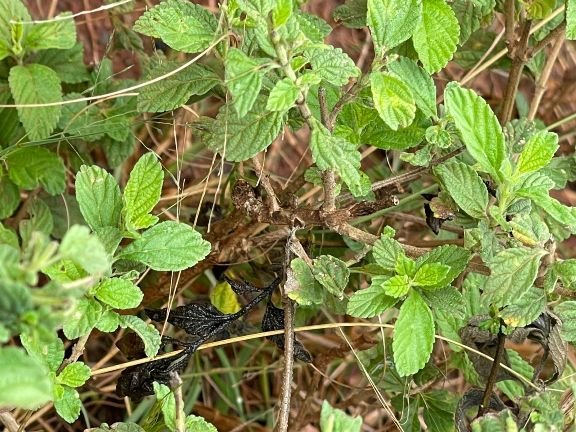
Author: Ivan Lätti
Photographer: Elrich Linde
Lippia is a genus of small, aromatic shrubs and shrublets in the Verbenaceae or verbena family.
The leaves grow opposite or in whorls of three, more than in four, and rarely alternate. The simple leaves often have wrinkled or rough surfaces and scalloped, toothed or lobed margins.
The flowers grow in dense to loose, sometimes globose spikes, usually elongating to cylindrical in fruiting. The flowers are sometimes two-lipped. Each is subtended by a bract. The calyx is bell-shaped or compressed and two- to four-lobed, sometimes enclosing or adhering to the fruit. The corolla has a variable tube, ending four-lobed or somewhat two-lipped, and coloured greenish or creamy yellow.
There are four stamens in two unequal pairs in a flower, arising halfway up the corolla tube, included or slightly exserted. The anthers are often longer than the filaments. The superior ovary has two locules, the style ending in an oblique or recurved, thickened stigma.
The fruit has a dry outer layer and bears two seeds with no nourishing tissue around them.
There are about 200 Lippia species found in Africa and America, six of which in southern Africa but not in the Western Cape.
Some of the plants are used in medicine and traditional medicine, eaten as vegetables, used in beverages, especially tea, in perfumes, in essential‑oil production, and in pest control as insect repellents. The most used South African one is Lippia javanica.
The plant in picture is L. rehmannii (Leistner, (Ed.), 2000; Pooley, 1998; Wikipedia; https://pmc.ncbi.nlm.nih.gov).