
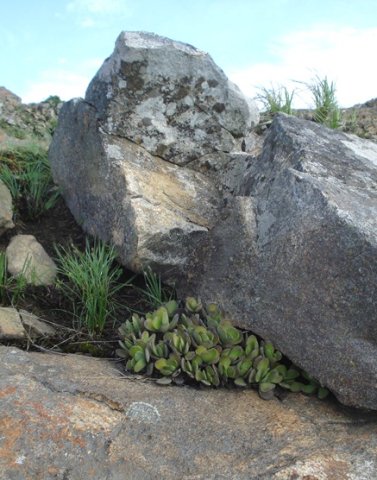
Crassula swaziensis squeezed but happy
Author: Ivan Lätti
Photographer: Judd Kirkel Welwitch
Crassula swaziensis was previously called C. argyrophylla and subdivided botanically at various times into a series of subspecies and varieties bearing different names, no longer upheld by SANBI. This tends to happen to variable plants that show different faces in different environments and regions, later to be found reproductively to function as one species. This one occurs across the northeastern parts of South Africa, and more widely as far as Malawi.
To some this is a shrublet, to others a perennial herb. Near the plant base the stems become woody. This is hidden by the numerous leaf discs as the branches spread on the ground, making the most of pretty settings on cliffs, sheetrock and other becoming niches in nature.
An easy plant for livening up a garden nook, given similar conditions to the world where it grows naturally (Smith, et al, 2017; Pooley, 1998; iNaturalist).